Why Achieving an Ideal Body Weight May Be One of the Best Things You Can Do for Your Eyes—and Your Overall Health
Written by Dr. Michael Lange OD, CNS on August 3, 2026
Most people understand that maintaining a healthy body weight can reduce the risk of heart disease, type 2 diabetes, high blood pressure, arthritis, and many other chronic illnesses. What many don’t realize is that achieving and maintaining an ideal body weight may also play an important role in supporting long-term eye health.
As an optometric physician and certified nutrition specialist, I have spent more than 30 years caring for patients with dry eye disease, glaucoma, diabetic eye disease, and age-related macular degeneration (AMD). Although each of these conditions has different causes and requires individualized treatment, many are influenced by the same metabolic and inflammatory factors that improve with a healthier lifestyle and healthy body weight.
Weight loss is not a cure for eye disease, nor should it replace appropriate medical treatment. However, maintaining an ideal body weight is one of the most important lifestyle strategies for improving overall health and may complement medical care for many common eye conditions.
Excess Body Fat Affects More Than Your Waistline
Body fat is not simply stored calories. It is metabolically active tissue that produces inflammatory chemicals and hormones capable of influencing nearly every organ system—including your eyes.
Excess body fat is associated with:
- Chronic low-grade inflammation
- Insulin resistance
- Elevated blood sugar
- High triglycerides
- High blood pressure
- Sleep apnea
- Increased oxidative stress
- Cardiovascular disease
These same factors can negatively affect the retina, optic nerve, tear-producing glands, meibomian glands, and the delicate blood vessels responsible for nourishing the eye.
Reducing excess body fat often improves many of these metabolic abnormalities, creating an internal environment that supports healthier aging.
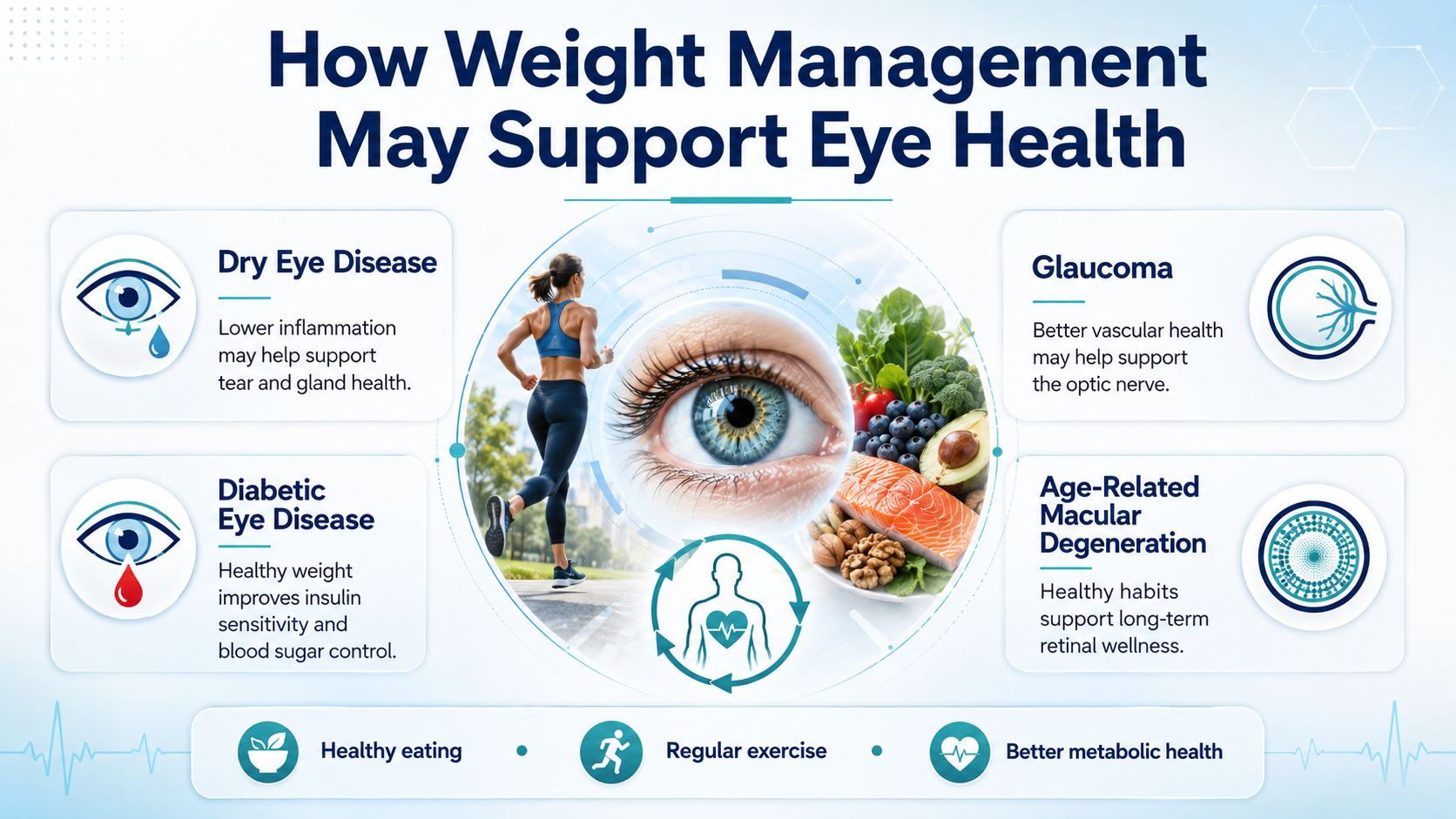
How Weight Management May Support Eye Health
Dry Eye Disease
Inflammation is one of the driving forces behind many forms of dry eye disease. While no single lifestyle change eliminates dry eye, maintaining a healthy body weight, eating an anti-inflammatory diet, exercising regularly, and consuming adequate omega-3 fatty acids may help reduce systemic inflammation and complement traditional dry eye treatments.
Diabetic Eye Disease
Maintaining a healthy weight improves insulin sensitivity and blood sugar control—two of the most important factors in reducing the risk of diabetic retinopathy and other diabetes-related eye complications.
Glaucoma
Glaucoma is a complex disease with many contributing factors. Lowering intraocular pressure remains the primary treatment, but supporting cardiovascular health, exercising regularly, reducing inflammation, and maintaining a healthy weight may also promote better overall vascular health and optic nerve support.
Age-Related Macular Degeneration
Healthy aging involves much more than taking nutritional supplements. People who maintain a healthy weight, eat nutrient-dense foods, avoid smoking, stay physically active, and manage chronic diseases often create a healthier environment for the retina throughout life.
The Biggest Obstacle Isn’t Knowing What to Eat—It’s Controlling Appetite
Let’s be honest.
Most people already know vegetables are healthier than potato chips.
They know sugary beverages aren’t good for them.
They know they should eat more protein and fewer processed foods.
Yet obesity rates continue to climb.
Why?
Because appetite, cravings, emotional eating, oversized portions, and constant exposure to highly processed foods make it incredibly difficult to consistently eat the right amount of food.
Simply put, many people struggle with excess body fat because they regularly consume more calories than their bodies require.
Learning how to better manage hunger and reduce cravings may be one of the most important steps toward achieving and maintaining a healthy body weight.
The Lange Survival Diet
Over many years of caring for patients—and following these same principles myself—I developed what I call The Lange Survival Diet.
It isn’t a fad diet.
It isn’t based on starvation.
It isn’t about counting every calorie.
Instead, it focuses on eating real, nutrient-dense foods that naturally satisfy hunger while minimizing highly processed foods that encourage overeating.
The core principles include:
- Eat high-quality protein with every meal.
- Fill your plate with colorful vegetables.
- Choose healthy fats such as extra virgin olive oil, avocados, nuts, seeds, and omega-3-rich fish.
- Reduce refined sugar and processed carbohydrates.
- Avoid ultra-processed snack foods whenever possible.
- Stay well hydrated.
- Build and preserve muscle through resistance training.
- Walk for 10–15 minutes after meals whenever possible.
- Prioritize quality sleep to support appetite-regulating hormones.
I’ve found these principles to be practical, sustainable, and effective for many patients looking to improve their health.

Natural Ways to Help Manage Appetite
There is no magic pill for weight loss.
Long-term success almost always comes from combining healthy eating with regular exercise, adequate sleep, stress management, and consistency.
Several nutritional strategies may also help support satiety.
Increase Protein Intake
Protein is one of the most satisfying nutrients we can eat. It helps preserve lean muscle while promoting fullness and reducing unnecessary snacking.
Eat More Fiber
Fiber slows digestion, supports a healthy gut microbiome, and helps people feel satisfied longer after meals.
Stay Hydrated
Many people mistake thirst for hunger. Drinking enough water throughout the day may reduce unnecessary calorie intake.
Exercise Regularly
Exercise improves insulin sensitivity, metabolic flexibility, cardiovascular health, and helps preserve lean muscle during weight loss.
Prioritize Sleep
Poor sleep alters hormones that regulate hunger and fullness, often leading to increased cravings and overeating.
Three Natural Ingredients Being Studied for Satiety
Nutrition research continues to explore naturally derived ingredients that may help support fullness when combined with a healthy diet and exercise program.

Slendesta®
Slendesta® is a standardized potato protein extract that has been studied for its potential to support the body’s natural satiety signals. Research suggests it may help some individuals feel fuller and better manage appetite as part of an overall calorie-conscious lifestyle.
Allulose
Allulose is a naturally occurring rare sugar that tastes remarkably similar to table sugar while providing very few calories and having minimal impact on blood glucose levels. It allows people to enjoy sweetness while reducing overall calorie intake.
Cocoa
Cocoa contains naturally occurring polyphenols and provides the rich chocolate flavor many people crave. When incorporated into lower-sugar foods, cocoa may help satisfy chocolate cravings while also supplying antioxidant compounds that continue to be studied for cardiovascular and metabolic health.
What I Recommend to Many Patients
One of the most common frustrations I hear is:
“Dr. Lange, I know what I should eat—I just get hungry, and the cravings get the best of me.”
I understand.
That’s why I encourage patients to use every healthy tool available.
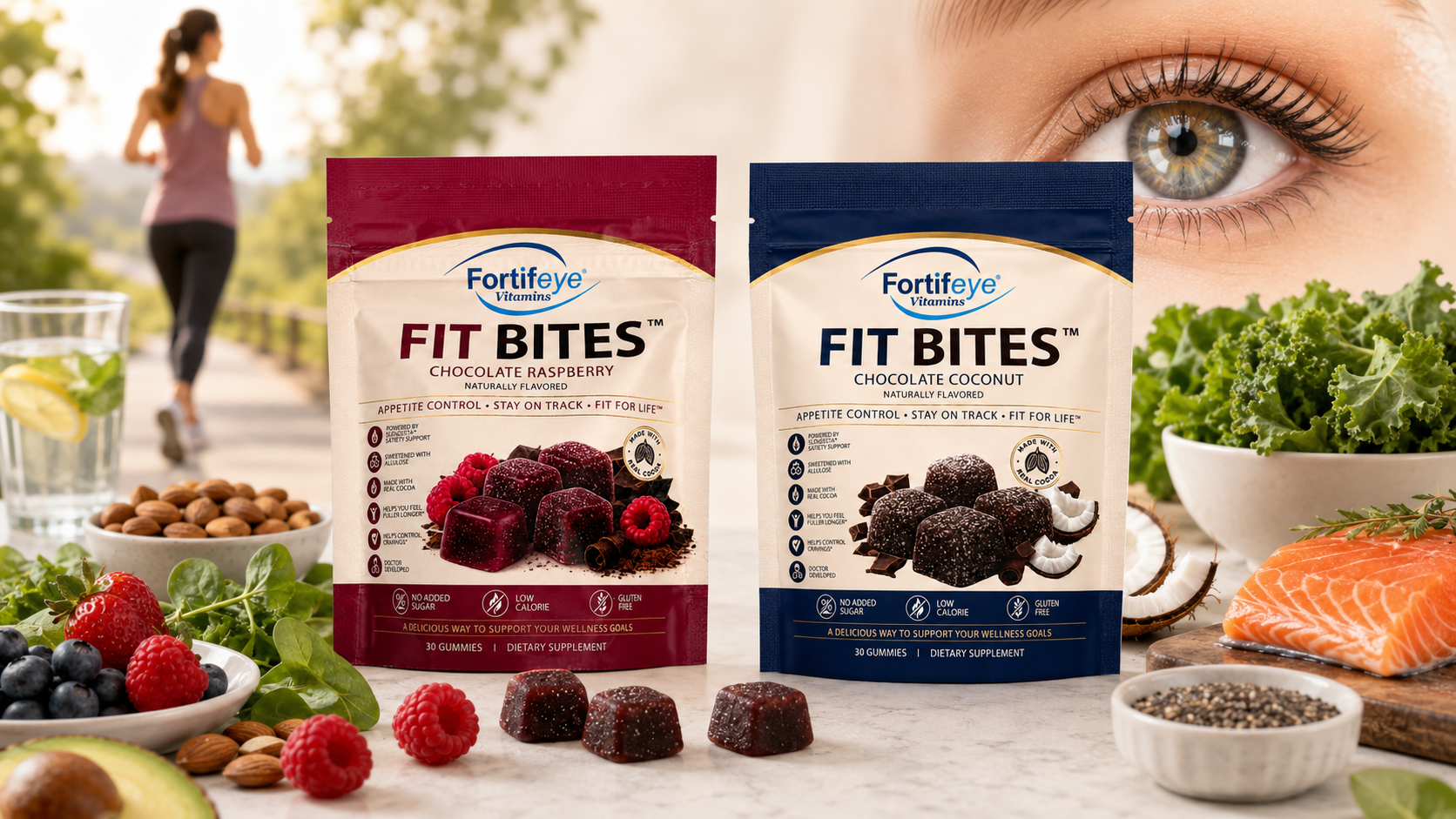
Along with following the Lange Survival Diet, eating adequate protein, staying physically active, getting enough sleep, and drinking plenty of water, I often recommend Fortifeye Fit Bites® to appropriate patients looking for additional nutritional support.
As the founder of Fortifeye Vitamins, I formulated Fortifeye Fit Bites® to complement the principles of the Lange Survival Diet. They combine ingredients such as Slendesta®, allulose, and cocoa into a delicious chocolate-flavored gummy designed to help support satiety and reduce cravings as part of a comprehensive weight-management program.
They are not a miracle weight-loss product, and they should never replace healthy eating or regular exercise. Rather, they are intended to be another tool that may help some people stay consistent with healthier eating habits.
Many of my patients tell me that reducing cravings makes it easier to avoid unhealthy snacks, control portions, and stay committed to their long-term health goals.
Dr. Lange’s Five-Step Appetite Control Plan
If you’re trying to lose weight or maintain a healthy weight, here are the five strategies I recommend most often:
- Follow the Lange Survival Diet by focusing on real, nutrient-dense foods.
- Eat plenty of protein at every meal to help promote fullness and preserve lean muscle.
- Move every day, including resistance training several times each week and a 10–15 minute walk after meals whenever possible.
- Prioritize hydration and quality sleep, both of which play important roles in appetite regulation.
- Consider evidence-based nutritional support if cravings remain a major obstacle. In my practice, I often recommend Fortifeye Fit Bites® as one option to help patients stay on track with their healthy eating plan.
The Bottom Line
Healthy weight management isn’t about looking better in the mirror—it’s about improving your quality of life.
Maintaining an ideal body weight supports the heart, brain, muscles, joints, metabolism, and may also create a healthier environment for your eyes by reducing inflammation, improving blood sugar regulation, supporting healthy circulation, and promoting better overall wellness.
There is no single food, supplement, or exercise program that guarantees success.
Lasting results come from consistently making healthier choices.
When you combine nutritious eating, regular exercise, muscle-building activities, restorative sleep, hydration, and thoughtful nutritional support when appropriate, you give your body—and your eyes—the best opportunity to thrive.
Healthy vision truly begins with a healthy body.
Selected References
- Age-Related Eye Disease Study 2 (AREDS2) Research Group.
- National Eye Institute. Age-Related Macular Degeneration.
- American Academy of Ophthalmology. Preferred Practice Patterns.
- World Health Organization. Obesity and Overweight.
- Bray GA, et al. Research on dietary protein, satiety, and weight management.
- Studies evaluating Slendesta® (potato protein extract) and satiety.
- Research on allulose and glycemic response.
- Research examining cocoa flavanols and cardiovascular health.
Healthy Weight and Eye Health FAQs
Learn more about healthy weight management, eye health,
appetite control and the Lange Survival Diet.
How can maintaining a healthy weight support eye health?
Maintaining a healthy weight may help reduce systemic
inflammation, improve blood sugar regulation, support
healthy circulation and lower oxidative stress. These
factors can affect the retina, optic nerve, tear-producing
glands, meibomian glands and the small blood vessels that
nourish the eyes.
Can weight loss cure dry eye, glaucoma, diabetic eye
disease or macular degeneration?
No. Weight loss is not a cure for eye disease and should
never replace an eye examination, prescribed medication
or treatment recommended by an eye care professional.
Healthy weight management is a supportive lifestyle
strategy that may complement appropriate medical care.
How may healthy weight management support people with
dry eye disease?
Inflammation contributes to many forms of dry eye disease.
Maintaining a healthy weight, eating nutrient-dense foods,
exercising regularly and consuming adequate omega-3 fatty
acids may help reduce systemic inflammation and complement
traditional dry eye treatments.
Why is healthy weight especially important for people
with diabetes?
Healthy weight management can improve insulin sensitivity
and blood sugar control. Better glucose management is one
of the most important ways to reduce the risk of diabetic
retinopathy and other diabetes-related eye complications.
What is the Lange Survival Diet?
The Lange Survival Diet is a practical approach centered
on real, nutrient-dense foods that naturally help satisfy
hunger. Its principles include eating quality protein,
colorful vegetables, healthy fats and omega-3-rich fish
while reducing refined sugar, processed carbohydrates and
ultra-processed snack foods.
It also emphasizes hydration, resistance training, walking
after meals and getting enough quality sleep.
What natural habits may help control appetite and cravings?
Helpful strategies include eating adequate protein and
fiber, drinking enough water, exercising regularly,
preserving lean muscle, managing stress and prioritizing
restful sleep. Long-term consistency is more important
than relying on a single food, supplement or short-term
diet.
What are Slendesta®, allulose and cocoa?
Slendesta® is a standardized potato protein extract that
has been studied for its potential to support natural
satiety signals. Allulose is a naturally occurring rare
sugar that provides sweetness with very few calories and
minimal impact on blood glucose. Cocoa provides rich
chocolate flavor and naturally occurring polyphenols.
These ingredients should be used as part of a comprehensive
nutrition and lifestyle program rather than as substitutes
for healthy eating and exercise.
What are Fortifeye Fit Bites® designed to do?
Fortifeye Fit Bites® are chocolate-flavored gummies
formulated with ingredients including Slendesta®,
allulose and cocoa. They are designed to provide
nutritional support for satiety and craving management
as part of a broader weight-management program.
Can Fortifeye Fit Bites® replace healthy meals or exercise?
No. Fortifeye Fit Bites® are not a miracle weight-loss
product and should not replace nutritious meals, regular
exercise, adequate sleep, hydration or medical care. They
are intended to be an additional tool that may help some
people remain consistent with healthier eating habits.
What are Dr. Lange’s main recommendations for healthy
weight management?
Focus on real, nutrient-dense foods; eat sufficient
protein; move every day; include resistance training;
walk for 10 to 15 minutes after meals when possible;
stay hydrated; prioritize sleep; and consider appropriate
nutritional support when appetite or cravings remain a
significant obstacle.
Dr. Michael Lange is an Optometric Physician, Certified Nutrition Specialist (CNS), founder of Lange Eye Institute, founder of Fortifeye® Vitamins, and host of the nationally syndicated Ask the Dr. radio program. For more than 35 years, he has dedicated his career to educating patients about the connection between nutrition, healthy aging, and lifelong vision.